Africa is becoming an important market for Russian fuels subject to international sanctions, attracting increasing volumes of low-cost products whose quality and environmental impact remain uncertain due to a lack of adequate standards and controls.
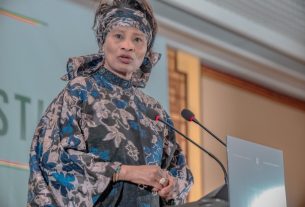
On Tuesday, July 22, in Abuja, at the West African Refined Fuel Conference, Nigerian businessman Aliko Dangote (photo) denounced the massive influx of Russian fuels at bargain prices. According to him, these products, which are often toxic, do not meet the standards in force in Europe or North America. They pose a threat not only to a competitive refining industry on the continent, but also to public health.
According to the World Health Organization (WHO), 3.7 million people die each year from air pollution, particularly from particles in exhaust fumes.
The Nigerian billionaire cites the port of Lomé, Togo, as a strategic hub where more than 2 million barrels of these petroleum products are stored before being redistributed to various markets in the region.
In a highly flexible regulatory environment, where emission and quality standards are virtually non-existent, many traders sell fuels in Africa that are considered unsellable elsewhere, without risk of sanctions. This is despite the fact that the continent produces around 7 million barrels of crude oil per day, but refines less than 40% of it locally.
According to data from June 2025, Russian exports of diesel and gas oil to Africa fell by 30% compared to the previous month, totaling around 700,000 tons. Morocco, Togo, Tunisia, and Egypt are among the main buyers. According to Reuters, several ships departing from Russia indicated a destination “for orders,” suggesting opportunistic distribution, often outside official maritime regulations.
For Dangote, this lack of regulation is a major obstacle to the development of African refining. His own refinery, the largest on the continent, has begun exporting, but faces competition from low-priced imported products, without uniform standards, which are saturating the market.
A precedent: the “dirty diesel” scandal
Aliko Dangote’s statements are reminiscent of a scandal documented in 2016 by the Swiss NGO Public Eye. The investigation revealed that traders such as Vitol, Trafigura, and Addax & Oryx were selling highly polluting fuels in West Africa, containing up to 378 times more sulfur than European standards allow.
Conducted in nine countries, including Benin, Senegal, Côte d’Ivoire, and Zambia, the study highlighted a parallel industry of so-called “African quality” fuels, exploiting local regulatory weaknesses.
Despite the commitments made at the time, some of these companies have limited themselves to adjusting their communications. Others claim to comply with local standards, while saying they are willing to adapt.